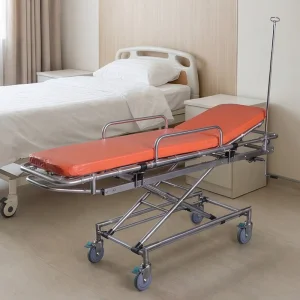
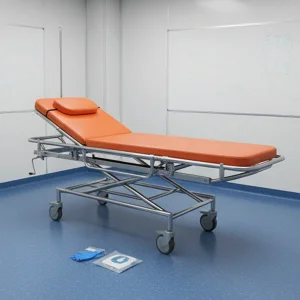
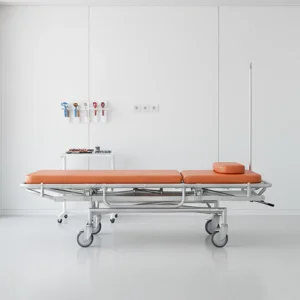
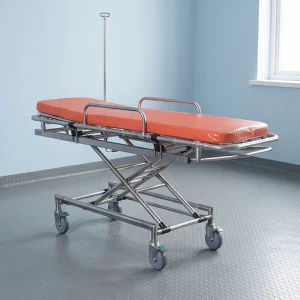
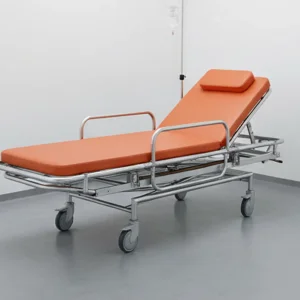
Engineered for high magnetic field environments. Seamless transition from emergency triage to diagnostic suites.
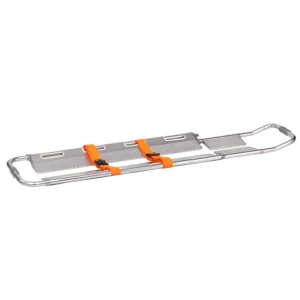
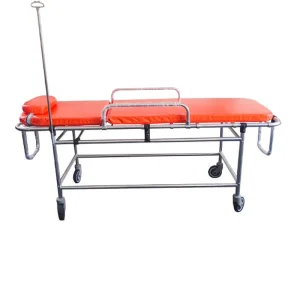
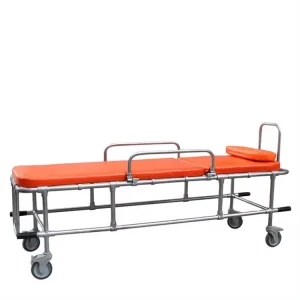
Analyzing local challenges, regional referral ecosystems, and the technical necessity of MR Conditional clinical equipment.
As healthcare modernization moves forward rapidly in the Kingdom of Lesotho, medical facilities in Maseru, Leribe, and Mafeteng are actively scaling up their diagnostic imaging capabilities. Historically, patients requiring advanced high-Tesla magnetic resonance imaging (MRI) were referred across borders to South Africa. However, with the government and private sector investing in local medical technology, major facilities such as the Queen 'Mamohato Memorial Hospital and local private diagnostic networks are increasing clinical access to MRI suites.
This expansion comes with a critical medical safety challenge: managing the powerful static magnetic fields generated by modern 1.5T and 3.0T MRI scanners. In the closed confines of an MRI room, any standard medical stretcher containing ferromagnetic materials (such as structural carbon steels or typical iron-containing fasteners) represents an immediate projectile hazard. The physics of magnetic attraction can cause a standard bed to turn into a dangerous projectile, threatening patient safety and damaging multi-million dollar imaging suites. Therefore, sourcing specialized MRI compatible stretchers is an essential step in ensuring clinical safety in Lesotho's growing medical centers.
All diagnostic equipment used in close proximity to magnetic resonance scanners must strictly adhere to ASTM F2503 standards. Using products explicitly certified as "MR Conditional" or "MR Safe" reduces clinical liability and protects sensitive equipment.
Globally, the market for magnetic resonance imaging safety products is driven by two main factors: increasing magnetic field strength (the industry shift from 1.5T to 3.0T, and research into 7.0T scanners) and strict occupational safety regulations. The international healthcare community emphasizes that patient transport must be continuous and smooth. Minimizing patient transfer cycles from emergency vehicles directly into the MRI room requires specialized, non-magnetic stretchers that can withstand both outdoor ambulance transport and high-Tesla magnetic fields.
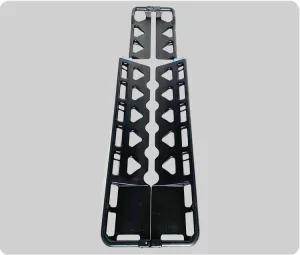
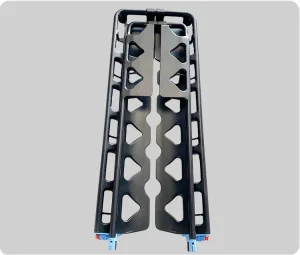
Leading manufacturers globally focus on non-magnetic metal engineering—using high-strength, low-density aluminum alloys, non-magnetic brass components, specialized engineering polymers, and high-performance carbon fiber structures. These materials ensure that the patient trolley does not undergo deflection, pull, or generate heat when subjected to radiofrequency (RF) pulses and spatial gradient magnetic fields.
A trusted global leader in patient transport systems, precision engineering, and specialized medical device manufacturing.
With years of industry experience, Guangdong Jones Medical Co., Ltd. has established itself as a leader in the production of high-quality medical equipment. Specializing in the design, development, and manufacturing of more than 100 different types of medical devices, the company is particularly well-known for its wide range of patient transport products, including stretchers, folding stretchers, shovel stretchers, stair stretchers, and ambulance stretchers.
Our company’s commitment to innovation, rigorous quality standards, and customer satisfaction has allowed us to achieve significant recognition both domestically and internationally. Our highly skilled team and state-of-the-art manufacturing processes ensure that each product we produce is designed with the safety, comfort, and reliability of patients in mind.
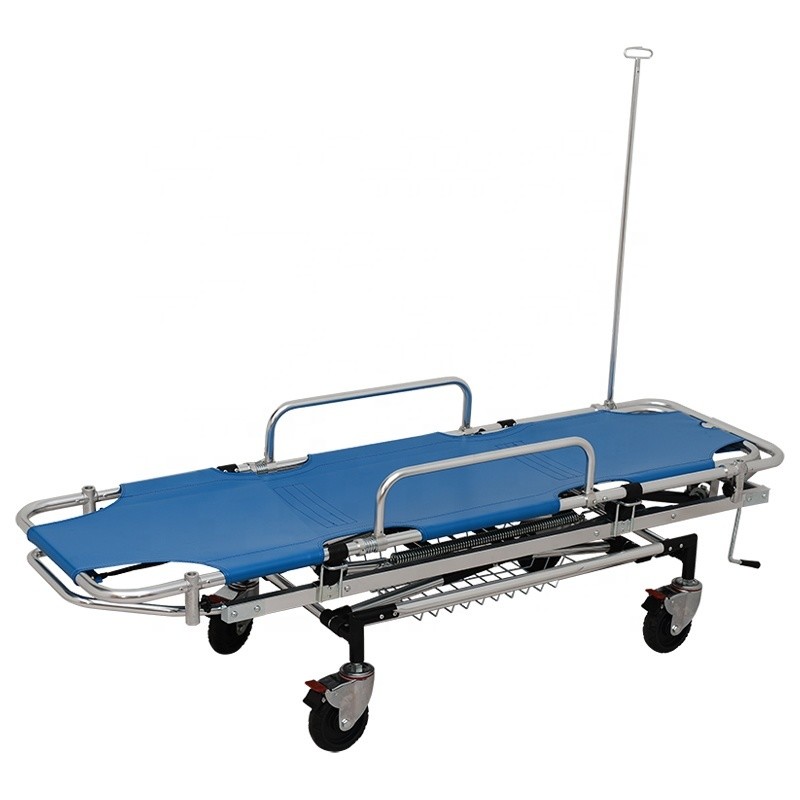
Our diverse product range also includes specialized medical equipment such as orthopedic stretchers, electric stretchers, and custom-designed products tailored to the specific needs of hospitals, emergency services, and rescue operations. At Guangdong Jones Medical Co., Ltd., we continue to strive for excellence, not only in product quality but also in the services we provide to our clients. Our aim is to contribute to improving patient care through innovative and reliable medical solutions.
Ensuring durability, safety, and strict compliance with international non-magnetic standards before shipment.
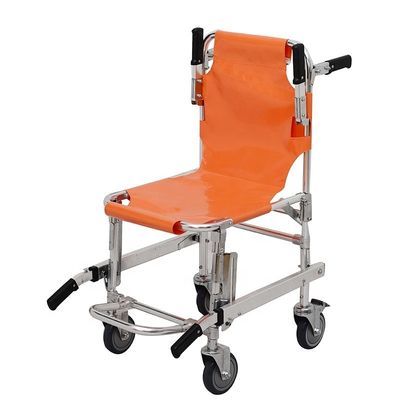
At Guangdong Jones Medical Co., Ltd., quality control is at the core of everything we do. The safety of patients and the efficiency of medical professionals depend on the reliability of our products. Our Quality Control Specification for Medical Stretchers ensures that each stretcher meets stringent standards before it reaches our customers.
Every step of our production process—from raw material inspection (verifying that aluminum profiles and fasteners are completely non-magnetic) to structural load testing under static and dynamic loads—is strictly monitored. Our dedicated quality inspectors verify the assembly alignment, brake mechanisms, and smooth elevation adjustments of our stretchers, ensuring they perform reliably in demanding clinical and emergency conditions.
We believe in continuous improvement and invest heavily in R&D to keep up with the latest healthcare advancements. We are dedicated to providing reliable medical transport solutions that enhance patient safety and comfort.
Medical stretchers manufactured by Guangdong Jones Medical are designed to address the specific challenges faced by healthcare providers in Lesotho:
Select from our widely exported models, fully compatible with global clinical specifications and custom orders.
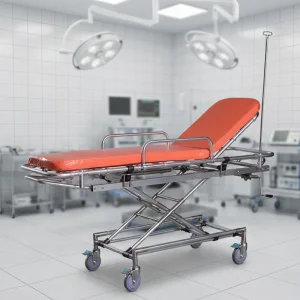
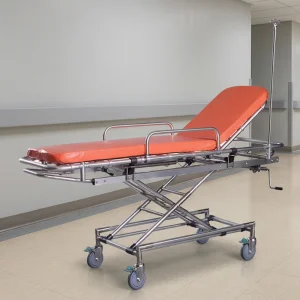
An expert analysis of material composition, electromagnetic properties, and logistics optimization for hospital procurers.
The primary engineering challenge of an MRI-compatible stretcher is the elimination of all ferromagnetic material. In a high-tesla environment (such as a 3.0T MRI system), the magnetic field is strong enough to attract magnetic materials with significant force. Therefore, structural parts must be manufactured from non-magnetic materials like premium aluminum alloy (e.g., 6061-T6 series), high-grade brass, or engineering plastics. Furthermore, any hardware like springs, bolts, and bearings must be crafted from non-ferrous alloys. Carbon fiber composites are also utilized due to their high strength-to-weight ratio and low magnetic susceptibility.
For health ministries and purchasing groups in developing markets like Lesotho, sourcing medical equipment directly from manufacturers in China offers significant cost and scale benefits. The manufacturing hub in Guangdong integrates raw material procurement, precision metal extrusion, robotic welding, and automated quality testing in one region. This integration keeps production costs low while maintaining high quality standards. Guangdong Jones Medical Co., Ltd. handles the complete supply chain, ensuring that hospital stretchers are certified to international standards (including ISO 13485 and CE) and shipped efficiently through major hubs like the Port of Durban, then transported overland to Maseru.
When purchasing equipment for radiology departments, hospital buyers should evaluate stretchers based on three core technical factors:
Contact our medical equipment engineering division today for a detailed quote, shipping costs to Lesotho, and technical compliance certificates.
Send Inquiry NowClear answers to common questions about MRI safety, transport logistics, and technical specifications.
 Jones Medical