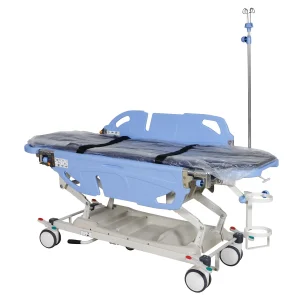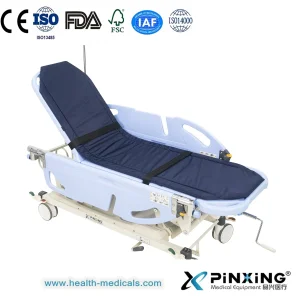
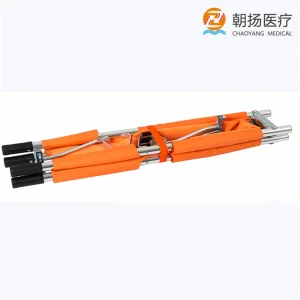
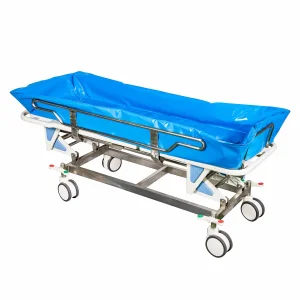
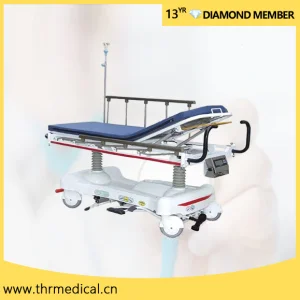
The global emergency medical services (EMS) and patient transfer landscape is experiencing a paradigm shift driven by stringent occupational safety guidelines, evolving clinical workflows, and advanced engineering technologies. Today, a medical stretcher is no longer merely a basic vehicle of transit. It has evolved into a highly optimized diagnostic and life-support platform engineered to minimize secondary trauma to patients while protecting paramedic crews from musculoskeletal strain injuries.
From an regulatory perspective, market access in regions like the United States and the European Union requires strict compliance with international standards such as EN 1865-1 to 5 (specifying requirements for stretchers used in road ambulances) and FDA Class I/II Medical Device registrations. Modern medical stretchers must balance light deadweight with exceptionally high structural loading capacities—often exceeding 220kg to 250kg to accommodate bariatric demographics. High-grade materials like aeronautical aluminum alloys, non-ferrous engineering plastics, and specialized stainless steel are selected to meet mechanical fatigue resistance and biological containment protocols.
A key driver of change is the convergence of diagnostic imaging and initial emergency response. Historically, patients had to be transferred multiple times from field stretchers to trauma stretchers, and then to imaging tables, significantly increasing the risk of cervical spinal displacement and internal hemorrhage. Today’s safety stretchers integrate radiolucent materials and non-metal structures, allowing direct patient transition into MRI and CT rooms without dangerous transfer operations. Concurrently, hydraulic-assisted loading mechanisms and automated electronic drive systems are rapidly replacing traditional manual scissor-lift linkages, ensuring smooth, vibration-free transport that preserves patient hemodynamics during the critical golden hour.
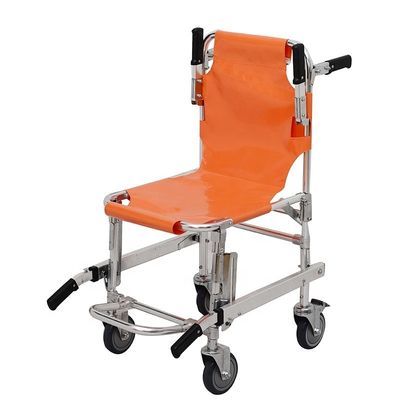
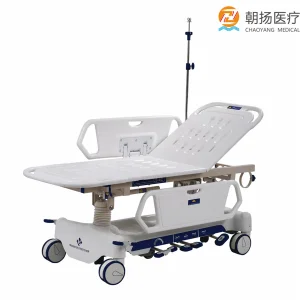
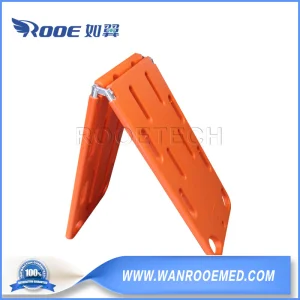
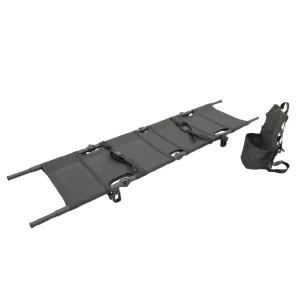
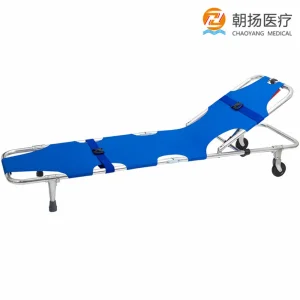
With years of industry experience, Guangdong Jones Medical Co., Ltd. has established itself as a leader in the production of high-quality medical equipment. Specializing in the design, development, and manufacturing of more than 100 different types of medical devices, the company is particularly well-known for its wide range of patient transport products, including stretchers, folding stretchers, shovel stretchers, stair stretchers, and ambulance stretchers.
Our company’s commitment to innovation, rigorous quality standards, and customer satisfaction has allowed us to achieve significant recognition both domestically and internationally. Our highly skilled team and state-of-the-art manufacturing processes ensure that each product we produce is designed with the safety, comfort, and reliability of patients in mind.
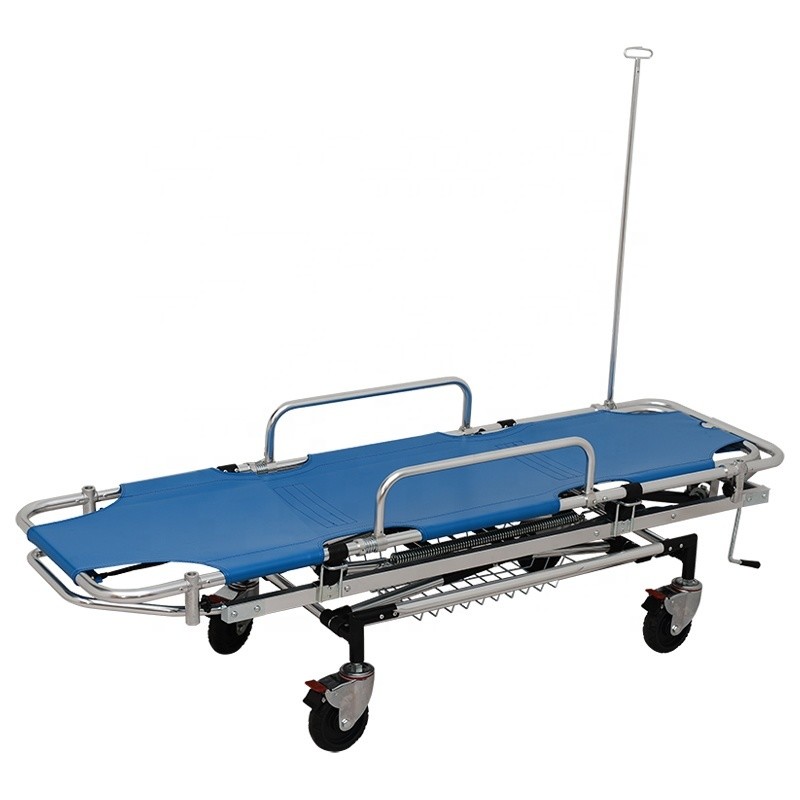
Sourcing emergency medical equipment from a professional Chinese manufacturer like Guangdong Jones Medical Co., Ltd. offers significant strategic and operations advantages for global medical institutions, municipal emergency services, and commercial procurement departments.
Southern China, particularly the Pearl River Delta, houses the world’s most concentrated medical device component cluster. This provides direct access to high-precision engineering materials: medical-grade aluminum alloys (e.g., AL-6005-T5, known for excellent corrosion resistance and lightweight strength), electroplated structural steels, advanced thermoplastic resins, and high-performance medical hydraulics. This supply chain density allows us to significantly reduce production lead times while remaining resilient to global logistics bottlenecks.
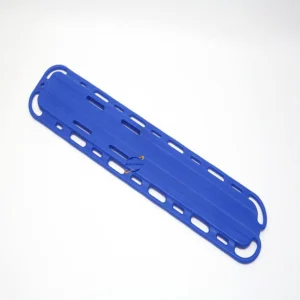
We deploy high-precision robotic welding arms to assemble stretcher base frames. Unlike manual welding, which is subject to human fatigue and minor deviations, automated welding guarantees consistent structural penetration and uniform weld seams. This is essential for load-bearing joints subjected to high impact and continuous vibrational stresses during ambulance travel. Additionally, our automated rotational molding capabilities allow us to produce seamless, high-density polyethylene (HDPE) spine boards with integrated structural foam, optimizing buoyancy and mechanical strength.
As a leading supplier, we align our product configurations with localized standards. Whether your jurisdiction demands compliance with EN 1789 crash-test deceleration standards (10G impact testing) or specific dimensions for compact aircraft aisles, our on-site design engineering team can customize dimensions, wheel lock mechanics, and hydraulic lift ranges to match regional regulatory requirements.
At Guangdong Jones Medical Co., Ltd., quality control is at the core of everything we do. The safety of patients and the efficiency of medical professionals depend on the reliability of our products. Our Quality Control Specification for Medical Stretchers ensures that each stretcher meets stringent standards before it reaches our customers.
Our quality assurance program starts with the inspection of incoming raw materials. Spectrometric verification ensures all aluminum alloys are free from micro-cracking and meet specified tensile strength parameters. All load-bearing weld seams undergo non-destructive testing (NDT), and every finished hydraulic stretcher trolley is tested under load for continuous performance over multiple cycles. We believe in continuous improvement and invest heavily in R&D to keep up with the latest healthcare advancements. We are dedicated to providing reliable medical transport solutions that enhance patient safety and comfort.
Medical stretchers must operate in various environments, each demanding unique structural designs and physical capabilities. We design our product lines to address these specific scenarios:
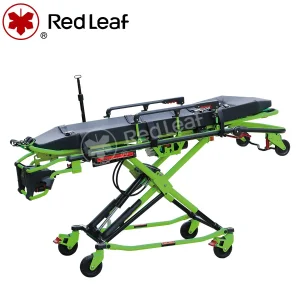
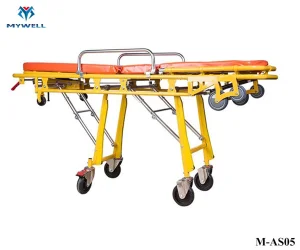
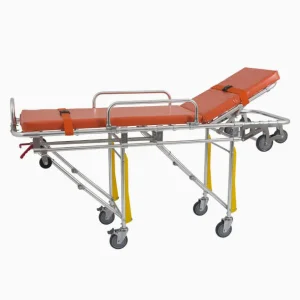
Self-loading and hydraulic-assisted systems minimize operator effort during loading. Foldable designs ensure secure storage inside compact ambulances, meeting dynamic 10G crash protection standards.
Highly specialized, non-magnetic stretchers made without ferrous metals. They prevent dangerous projectiles near strong magnetic fields, ensuring safe patient transport directly into MRI scanning rooms.
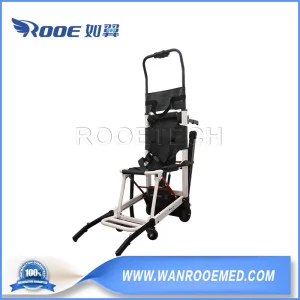
Ultra-narrow tracked stair chairs allow safe transport in narrow spaces like aircraft aisles and high-rise stairwells, protecting patients and lowering worker injury risks.
When procurement officers, medical distributors, and government health authorities purchase safety stretchers, selecting a supplier based on the lowest price can lead to higher long-term costs. To ensure patient safety and minimize liability, evaluate these key engineering and service parameters:
 Jones Medical