A basket stretcher can protect an injured person during a difficult evacuation, but it does not make a risky route safe. On steep trails, loose rock, wet roots, or narrow ledges, rescuers must coordinate every movement. The patient’s condition, weather, terrain, and available team members all affect the plan. Small details matter: secure straps, check the stretcher’s balance, and keep communication clear. Slow is often safer.
How to use a basket stretcher for mountain or wilderness rescue? This guide introduces the key steps, from assessing the scene and preparing the patient to securing the load and moving as a team. It also explains why trained rescuers should follow their organization’s procedures and the stretcher manufacturer’s instructions. No single technique fits every rescue. A method that works on a broad trail may fail on a steep, exposed slope. That deserves a second look.
The goal is not simply to carry the stretcher. It is to reduce avoidable movement, protect rescuers from injury, and monitor the patient throughout the evacuation. Before lifting, teams should agree on commands, route changes, and what to do if conditions worsen. Practice matters; so does admitting when a plan needs revision. This overview cannot replace hands-on training or professional medical guidance, but it can help readers understand the decisions behind a careful wilderness evacuation.
Before moving a basket stretcher, check for falling rocks, unstable snow, moving water, traffic, and changing weather. Stop. Scan. Listen. Identify a safe route in and out, then assign one person to coordinate the team. Wear suitable protective equipment and follow your rescue training. If the scene remains unsafe, wait for support rather than adding another patient. A clear plan matters, even when the terrain looks familiar.
Approach the patient calmly and explain what you are doing. Check responsiveness, breathing, and severe bleeding; call for medical help and follow local protocols. Do not move someone with a possible spinal injury unless danger requires it or your training directs you to do so. Control bleeding within your scope, keep the patient warm with dry insulation, and watch for changes in breathing or alertness. Before loading, make sure the stretcher is ready, the patient is supported, and straps are secure without restricting breathing. A common mistake is tightening every strap quickly and overlooking comfort or circulation. Recheck the patient and restraints during the carry. Small details are easy to miss when everyone is tired.
Before a patient enters the basket, inspect the frame in good light. Look for bent tubing, cracked welds, sharp edges, blocked drainage holes, and loose handles. Small faults matter. Check every restraint, buckle, and attachment point for wear, fraying, or grit that could prevent a secure closure. Verify that the head support and padding are present, dry, and positioned correctly. Then check the litter’s rated capacity and approved rigging instructions; never assume a familiar-looking connector is compatible. Look closely.
Prepare the carry route and team equipment as carefully as the basket. Remove loose objects, stage spare restraints, and confirm that the patient can be secured without obstructing breathing or circulation. Have trained rescuers check connections and perform the approved function check before loading. Do not improvise a field load test. The U.S. Bureau of Labor Statistics recorded 2.6 million nonfatal workplace injuries and illnesses in private industry in 2023, in its Survey of Occupational Injuries and Illnesses. That figure is not specific to rescue work, but it reinforces the value of deliberate equipment checks and coordinated handling. I still find it easy to overlook a buckle when cold hands and poor light slow the inspection; a second-person check can catch what one rescuer misses.
Before lifting, inspect the basket, straps, and route for loose hardware, sharp edges, and likely snags. Assign one rescuer to manage the head and give clear commands. Keep the patient’s head, shoulders, and pelvis aligned while moving them into the basket. Support painful areas with padding, but keep the face visible and the airway unobstructed. Small gaps matter. Fill spaces at the sides and beneath the knees so the patient does not slide when the basket tilts. CDC materials on older-adult falls report that about one in five falls causes a serious injury. That figure is not specific to wilderness rescues, but it underscores why careful handling matters.
Secure the torso and pelvis before the legs, using the basket’s designated straps. Straps should prevent movement without restricting breathing or pressing on injured areas. Check that buckles are closed and straps lie flat; a twisted strap can create a painful pressure point. Add head support only as appropriate, and avoid forcing a patient’s neck into alignment. The Wilderness Medical Society’s spinal cord protection guidelines support selective rather than automatic spinal restriction, guided by patient assessment and clinical judgment. Recheck breathing, circulation, comfort, and strap tension after securing, then repeat checks during evacuation. A wet jacket or changing slope can loosen the fit. Even a careful setup may need adjustment.
Attach the carrying or lowering system only to the stretcher’s designated connection points. Check the equipment instructions before rigging; attachment layouts differ. Inspect webbing for cuts, worn stitching, and contamination, then check metal hardware for cracks or deformation. Keep it simple. Route each strap without twists, and secure every buckle or connector as specified. Make sure no strap crosses the patient’s airway or blocks access to essential care. A tidy setup is easier to inspect, especially in poor light.
Before moving, have one team member trace each connection from the stretcher to the carrying or lowering system. Confirm that connectors are fully closed and locked, and that the load path is clear of loose gear. Pause here. A controlled check with the rescue team, using the approved procedure, can reveal uneven tension or a misplaced strap. For a lowering operation, protect the system from sharp edges and agree on clear commands before anyone moves. It is easy to rush this check when weather worsens; that pressure is a reason to slow down, not skip a step. If anything looks uncertain, stop and reassess the rigging with trained personnel.
Before lifting a patient in a basket stretcher, check their breathing, responsiveness, pain, and visible injuries. Secure them with the restraint system, keeping straps snug without limiting chest movement. A trained rescuer should remain able to observe the patient’s face and breathing throughout the carry. Small changes matter.
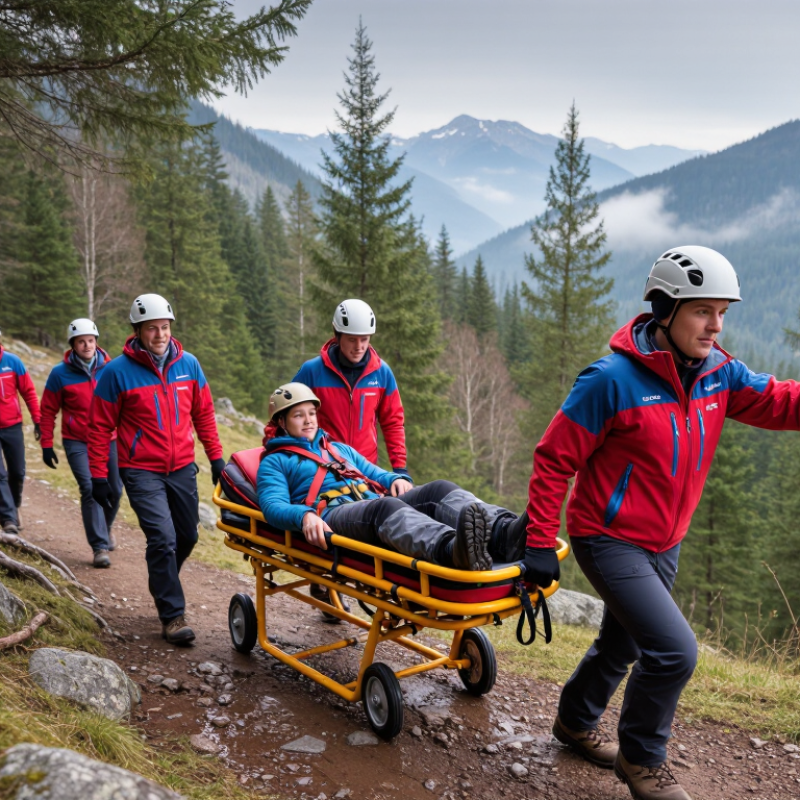
As the team moves over roots, loose rock, or narrow trail, use a steady pace and clear commands. One rescuer can watch the patient while another leads the route; agree on simple signals to stop. Recheck breathing, alertness, skin color, and pain whenever the terrain allows, and after any jolt or position change. If the patient becomes less responsive, struggles to breathe, or reports worsening symptoms, pause in a safe place and reassess. Do not keep moving just to stay on schedule.
Keep communication calm and specific. Tell the patient what is happening, and ask brief questions when they can answer. Note changes and share them with the rescue team or medical personnel at handoff. Conditions in the field are imperfect; even a careful check can miss something. Use your training, follow local rescue protocols, and seek medical guidance as soon as possible.
Look for falling rocks, unstable snow, moving water, traffic, and changing weather. Stop. Scan. Listen. Choose a safe route and assign one person to coordinate.
Wait for support rather than adding another patient. Familiar terrain can still change quickly.
Speak calmly and explain what you are doing. Check responsiveness, breathing, and severe bleeding, then seek medical help and follow local protocols.
Avoid moving them unless danger requires it or your training directs you to do so. This decision can feel difficult under pressure.
Use the restraint system snugly, but do not restrict breathing. Check the patient’s comfort and circulation; tightening every strap quickly can miss both.
Watch breathing, alertness, skin color, and pain. A trained rescuer should keep the patient’s face in view.
Use a steady pace and clear commands on roots, loose rock, or narrow trails. Agree on a simple signal to stop.
Stop in a safe place if the patient becomes less responsive, struggles to breathe, or reports worsening symptoms. Do not rush to keep schedule.
Note changes during the carry and tell the rescue team or medical personnel. Field checks are imperfect; something may be missed.
How to use a basket stretcher for mountain or wilderness rescue? Begin by assessing the scene for hazards and checking the patient’s condition. Provide appropriate first aid, stabilize the patient as needed, and plan a route that accounts for terrain, weather, and the available rescue team. Before use, inspect the basket, straps, handles, and attachment points for damage, then prepare it on stable ground.
Carefully position the patient in the stretcher while maintaining any necessary spinal or limb support, and secure them snugly without restricting breathing or circulation. Attach the approved carrying or lowering system according to its instructions, and have team members verify all connections before moving. Transport the patient smoothly, communicate clearly, and pause when needed to monitor breathing, comfort, and overall condition. Adjust the plan if the patient’s status changes or the route becomes unsafe.

Jones Medical