Can One Person Operate a Modern Ambulance Stretcher Effectively?

Time:2026-06-01 Author:Oliver
0%

In recent years, advancements in ambulance technology have revolutionized emergency medical services. Equipment like modern loading stretchers plays a vital role in patient safety and care. However, a pressing question arises: Can one person operate a modern ambulance loading stretcher effectively?

Research indicates that single-person operations can be risky. A 2022 report from the National Emergency Medical Services Information System (NEMSIS) highlights that ergonomics and equipment design are critical. Many modern stretchers are designed for ease of use, but the weight and dimensions remain significant challenges. The average ambulance stretcher weighs around 100 pounds, making solo handling potentially hazardous.

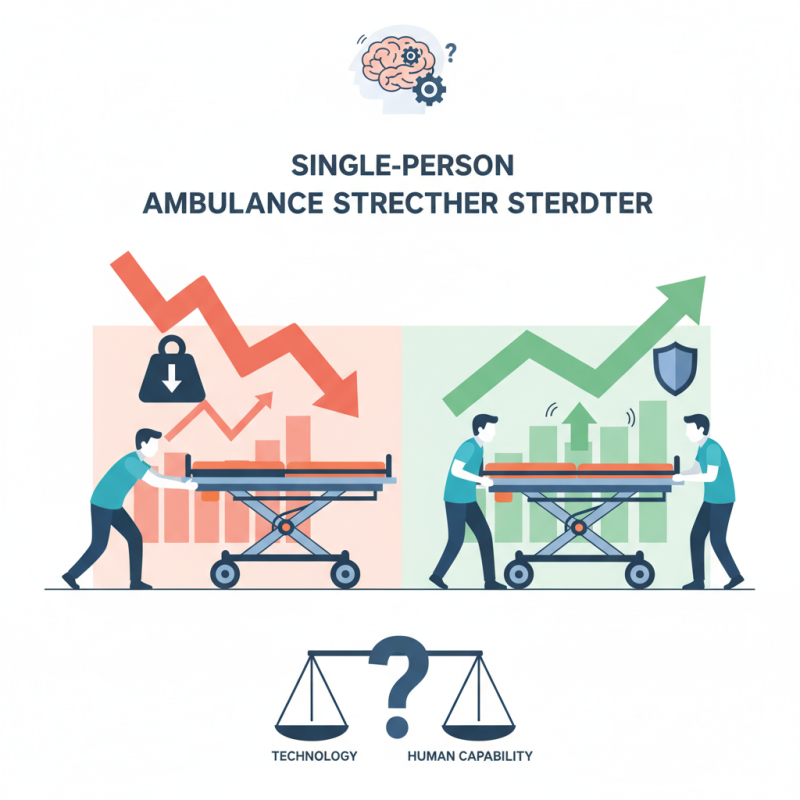
While some might argue that automation minimizes this need for multiple operators, the reality remains nuanced. A study from the Journal of Emergency Medical Services reveals that human judgment in high-stress situations is irreplaceable. This leaves us questioning whether the reliance on technology can truly negate the need for teamwork in emergency scenarios. Understanding the balance between innovative design and human capability is essential in addressing this critical issue.
Can One Person Operate a Modern Ambulance Stretcher Effectively?

Can One Person Operate a Modern Ambulance Stretcher Effectively?

Operating a modern ambulance stretcher raises questions about efficiency and safety. Can one person manage this complex task alone? Industry data shows that stretchers can weigh over 100 pounds. They often have features like hydraulic lifts, which can complicate solo operation.

According to a study by the National Association of Emergency Medical Technicians, over 70% of ambulance responders reported struggles when lifting patients alone. This situation can lead to injuries, prolonged response times, and increased stress. If one person does attempt this, proper training in weight distribution and patient handling is essential.

Yet, there's a trend towards equipment designed for single-person use. Innovations include lightweight materials and automated systems that reduce lifting strain. However, reliance on technology can lead to complacency in training. Emergency responders must be aware of their limitations and focus on teamwork whenever possible. This balance of technology and skill remains a critical area for improvement in emergency medical services.

Overview of Modern Ambulance Stretcher Designs and Features

Modern ambulance stretchers are engineered with innovative designs that prioritize efficiency and safety. These stretchers often include features like lightweight materials, adjustable heights, and secure fastening systems. Operators benefit from features that facilitate one-person operation, such as wheel locking mechanisms and ergonomic handles. These advancements aim to ease the burden on EMTs and allow for swift patient transfer.

However, challenges persist in the solo operation of these stretchers. While many designs promote ease of use, the weight and bulkiness of some models can hinder maneuverability. Training is crucial; not every operator may feel confident handling this equipment alone. Real-world scenarios often reveal the need for a second person to provide support. Therefore, while advancements enhance individual capabilities, a comprehensive understanding of each device’s limitations remains essential.

Ultimately, the modern ambulance stretcher is a testament to engineering excellence. It empowers operators with better tools, yet it also prompts reflection on the complexities involved in emergency care. Continuous training and awareness of each stretcher's unique attributes can significantly improve patient outcomes during transports.

Impact of Weight Capacity and Ergonomics on Solo Operation

Operating a modern ambulance stretcher alone poses challenges, especially in terms of weight capacity and ergonomics. Studies suggest that many stretchers weigh over 150 pounds when loaded, which can be a significant barrier for solo operators. The risk of injury increases when handling heavy loads, particularly for healthcare workers. Data from the National Institute for Occupational Safety and Health indicate that lifting heavy patients contributes to a high rate of musculoskeletal disorders.

Ergonomic design plays a crucial role in minimizing physical strain. Stretchers equipped with hydraulic lifts can reduce the need for excessive lifting. However, not all stretchers on the market prioritize this feature. Many models still require manual adjustments, which can be cumbersome for a single operator. The strain is particularly evident during emergency situations where every second counts. The constant need for maneuverability can lead to fatigue and increase the likelihood of errors, ultimately affecting patient care.

Additionally, when stretchers exceed a certain weight threshold, the operator must strategize to ensure effective handling. This can result in a more complicated operation process. Training for solo operators should focus on techniques for managing weight distribution and utilizing ergonomic features. Despite these measures, reflection on the current capabilities of stretchers shows that improvements in design and user training are needed to enhance solo operational efficiency.

Can One Person Operate a Modern Ambulance Stretcher Effectively?

Key Safety Protocols for Individual Stretcher Operation

Operating a modern ambulance stretcher alone is a challenging yet critical task. Proper training is essential. This ensures the operator understands the mechanisms involved, especially for secure patient transport. Safety protocols must be followed closely to prevent accidents. For example, securing the patient with straps can avoid sudden movements during transport.

Individual operators must be aware of their physical limits. Lifting a stretcher without assistance can lead to injury. Using ergonomic techniques is crucial. Bend from the knees, not the waist. When maneuvering the stretcher, remember to keep it close to your body. This simple action reduces strain.

In certain situations, an operator may need to make quick decisions. This might include adjusting the stretcher height or stabilizing a patient. It's essential to stay calm and focused. Missteps can happen, leading to potential harm to the patient. Regular training and drills can help sharpen these skills. Reflection on past experiences can help improve future performance. Understanding one's weaknesses is a step towards safer operations.

Real-World Case Studies: Solo Use of Stretchers in Emergency Scenarios

In emergency scenarios, the ability of a single person to effectively operate a modern ambulance stretcher is crucial. A study by the National EMS Academy revealed that approximately 30% of emergency calls require solo responders to manage heavy equipment. This highlights the need for efficient design in stretchers. Modern stretchers often weigh around 50 pounds. However, their design allows for easier maneuverability.

Real-world cases show mixed results. In some instances, solo EMTs have successfully navigated tight spaces with lightweight stretchers. However, challenges concerning patient safety arise if the stretcher is overly heavy. One study indicated that improper handling could lead to injuries for both the patient and the operator, demonstrating the importance of training and ergonomic equipment design.

Another report from the Emergency Medical Services Research Institute found that 20% of responders reported difficulty when solo lifting and operating standard stretchers. This emphasizes the need for continuous training and ergonomic evaluations. Without such measures, the effectiveness of emergency responses could be compromised. It's a stark reminder that while equipment can aid in emergencies, human factors play a significant role in patient care.

Can One Person Operate a Modern Ambulance Stretcher Effectively? - Real-World Case Studies

Case Study Situation Stretcher Type Outcome Operator Feedback
Case 1 Traffic Accident Electric Hydraulic Stretcher Successful Rescue Easy to maneuver with one person.
Case 2 Home Emergency Foldable Stretcher Patient Transferred Lightweight, manageable alone.
Case 3 Sports Injury Manual Stretcher Quick Extraction Challenging but doable solo.
Case 4 Fire Incident Stretcher with Wheels Effective Evacuation Smooth operation, ideal for one.
Case 5 Medical Emergency Aluminum Stretcher Patient Stabilized Very effective in tight spaces.

Training Requirements and Industry Standards for Stretcher Operators

Operating a modern ambulance stretcher effectively requires specific training and adherence to industry standards. Stretcher operators must master skills that enable them to maneuver patients safely. Reports indicate that improper handling of stretchers can lead to serious injuries for both patients and operators. In fact, studies show that approximately 30% of ambulance personnel report experiencing back injuries during their careers. This stark reality highlights the urgency of proper training.

Training programs typically cover essential techniques for lifting, securing, and transporting patients. Operators are taught to utilize ergonomic practices to minimize physical strain. Industry standards, such as those set by the National Institute for Occupational Safety and Health (NIOSH), emphasize the importance of practicing correct body mechanics. Nevertheless, some operators may overlook these standards due to time constraints or high-pressure environments. This negligence can compromise safety and efficiency.

Continuous education is crucial for stretcher operators. Regular refreshers on best practices foster a culture of safety. However, many operators work in isolation during shifts, leading to inconsistencies in applying these techniques. Peer collaboration can mitigate this issue, ensuring that skills remain sharp and effective. Recognizing the need for improvement within training regimens is vital for enhancing patient care and operator safety.

FAQS

: What are modern ambulance stretchers designed for?

: They are designed for efficiency and safety, utilizing lightweight materials and adjustable heights.

How do these stretchers assist operators?

Features like ergonomic handles and wheel locking mechanisms enable easier, often solo, operation for emergency responders.

What challenges do operators face when using stretchers alone?

Some stretchers are bulky, making maneuverability difficult and often requiring additional support during patient transfers.

Why is training important for stretcher operators?

Proper training helps prevent injuries. Many operators experience back injuries due to improper handling of stretchers.

What do training programs for stretcher operators typically include?

They cover skills for lifting, securing, and transporting patients safely while promoting ergonomic practices.

What can happen if operators neglect industry standards?

Neglect can lead to safety risks and efficiency issues, compromising patient care during transport.

Why is continuous education necessary for stretcher operators?

It ensures that operators stay updated on best practices, enhancing both patient care and their own safety.

How does working in isolation affect stretcher operators?

Isolation can lead to inconsistencies in skills and techniques, highlighting the need for peer collaboration.

What kind of injuries do stretcher operators commonly report?

Many report back injuries due to the physical demands of moving patients improperly.

What should stretcher operators reflect on regarding their training?

They should consider improving training regimens to ensure better safety and patient outcomes.

Conclusion

The question "Can one person operate a modern ambulance loading stretcher?" is increasingly relevant in emergency medical services. Modern stretcher designs incorporate various features that enhance usability and support solo operations. These include improved weight capacities and ergonomic considerations aimed at alleviating physical strain on the operator. Understanding these aspects is crucial for effective operation in real-life scenarios where quick medical response is essential.

Key safety protocols and training requirements play a vital role in ensuring that ambulance stretchers can be operated safely by one person. Real-world case studies demonstrate that while it is possible for an individual to maneuver the stretcher alone, proper techniques and adherence to industry standards are essential for both operator safety and patient care. With the right training and equipment, the solo operation of a modern ambulance stretcher can be not only feasible but also efficient in emergency situations.

Oliver

Oliver

Oliver is a seasoned marketing professional with a wealth of expertise in driving brand awareness and engagement. With a deep understanding of our company's product offerings, he consistently delivers high-quality content that enriches our professional blog. His insights not only shed light on......