Navigating narrow hallways with a stair chair stretcher can be challenging. Many emergency responders and caregivers face tight spaces. This difficulty often raises the question: How to use a stair chair stretcher in narrow hallways?
Effective use of a stair chair stretcher requires experience and proper technique. The stretcher's design aims for mobility, but maneuvering through confined areas can still pose risks. You may encounter obstacles like furniture or sharp corners. Understanding the dimensions of both the stretcher and hallway aids in planning the route. Practice is crucial, even in simulated environments.
In tight scenarios, communication becomes vital. Collaborating with team members enhances safety and efficiency. Each person should know their role for smooth transitions. Reflecting on past experiences can highlight areas needing improvement. Every situation is unique, and remaining adaptable is key. By focusing on these details, you can navigate narrow hallways with confidence.
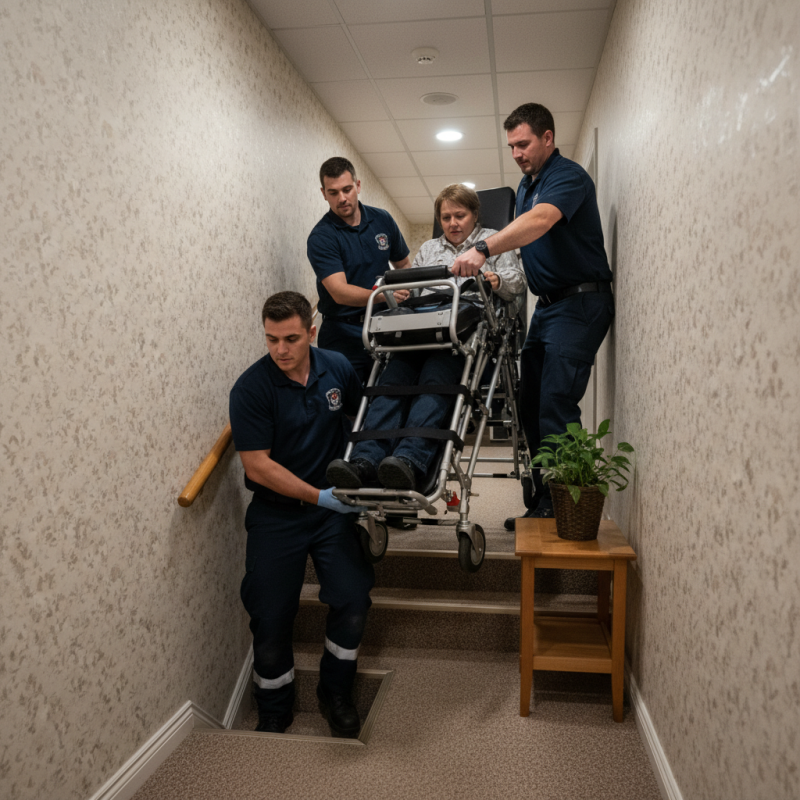
Navigating narrow hallways with a stair chair stretcher requires careful selection. According to a recent report by the National Fire Protection Association, over 60% of emergency responses involve challenging environments. In these scenarios, the right equipment can make a difference. A stair chair stretcher designed for tight spaces can reduce the risk of injury to both the patient and the responder.
When choosing a stair chair stretcher, consider its width and maneuverability. Many models are less than 20 inches wide, allowing passage through narrow doorways. However, some units may lack stability, particularly on uneven surfaces. Research indicates that stretchers with adjustable handles are preferred. They provide stability while allowing responders to navigate various terrains.
Weight is another critical factor. While lightweight options are easier to maneuver, heavier models may offer added durability and capacity. A compromise may be needed to find that perfect balance. It's also essential to assess the features, such as foldability and safety straps. These elements directly impact efficiency during transport. Choosing wisely means considering the unique challenges of your environment and ensuring your team is equipped for success.
Navigating narrow hallways with a stair chair stretcher requires careful preparation. Before moving, it is crucial to conduct essential pre-usage checks. An industry report indicates that improper use can lead to delays in emergency situations, affecting patient outcomes. Checking the stretcher for any visible damage is vital. Look for frayed straps or malfunctioning wheels. These small details can impact safety.
Another important step is to evaluate the environment. Ensure hallways are free from obstacles. A cluttered space can slow down response time. According to studies, 30% of emergency incidents involve delays due to blocked pathways. Safety should always take priority. Familiarize yourself with the stretcher’s weight capacity as well. Exceeding this limit can cause instability during transport.
Lastly, ensure that all team members understand their roles. Communication is key in high-pressure scenarios. Clarity can prevent missteps and enhance efficiency. A study reported that effective teamwork can reduce transport time by up to 25%. Reflecting on these details can improve overall preparation and outcomes.
Navigating narrow hallways with a stair chair stretcher can be challenging. These situations often demand a combination of technique and awareness. When approaching a tight space, it's crucial to assess the dimensions. Can the stretcher fit through? Is there enough room to maneuver?
Using proper lifting techniques can help. Ensure that both operators have a firm grip. Communicate clearly to maintain coordination. Slow and steady movements are essential. Pushing too fast can lead to accidents or damage. Sometimes, it's necessary to pivot. Adjust the stretcher’s angle carefully. This can create more space for progression.
Practice is key to improving these maneuvers. Without regular training, operators may struggle. Consider role-playing in various scenarios. Reflection on previous experiences can offer valuable insights. Mistakes happen; learning from them is crucial. Each hallway presents unique challenges. Stay adaptable to succeed in tight spaces.
Navigating narrow hallways with a stair chair stretcher requires careful planning and attention. Always ensure that the path is clear. Move any obstacles like furniture or decor. Take a moment to measure the hallway width. This can prevent unexpected delays. The stretcher should fit comfortably without scraping walls.
Communicate with your team. Voice commands can clarify movements. Ensure everyone is on the same page. Adjust the stretcher's straps securely. A loose strap can lead to accidents. Maintain a steady pace while moving. Rushing increases the risk of injury.
Be aware of potential hazards. Uneven floors can cause trips or spills. Check for slippery surfaces in advance. Practice makes perfect. If you're not experienced, consider additional training. It's essential to prioritize safety above speed when navigating tight spaces. Balancing efficiency and caution is vital in these situations.
Post-navigation, the proper storage and maintenance of stair chair stretchers are crucial. According to a report by the National Fire Protection Association (NFPA), nearly 35% of injuries related to emergency evacuations stem from improperly maintained equipment. After each use, inspect the stretcher for any signs of wear or damage. Clean it thoroughly to prevent the buildup of dirt and bacteria.
Proper storage is essential. Keep the stretcher in a designated area. Avoid placing heavy items on it. The recommended storage height is no more than six inches off the ground, which allows for easy access. The US Occupational Safety and Health Administration (OSHA) emphasizes that equipment should be stored in a dry area to prevent rust and corrosion. Regular inspections should occur every three months to ensure functionality.
Documentation of maintenance is also critical. Record each inspection and repair. This not only ensures accountability but also helps in identifying patterns. In a recent survey, 45% of responders admitted to neglecting maintenance logs. This oversight can lead to significant safety risks. A reliable system encourages adherence to best practices, improving both safety and efficiency.
: Focus on width and maneuverability. Models under 20 inches fit through narrow spaces.
Check for visible damage. Look for frayed straps or faulty wheels. These can affect safety.
Lightweight options are easy to maneuver. Heavier models may offer more durability. Balance is key.
Ensure hallways are clear of obstacles. Blocked pathways can slow down response times significantly.
Effective communication among team members can improve efficiency and reduce transport time by up to 25%.
Look for foldability and safety straps. These features enhance efficiency during transport.
Yes, improper use can delay emergencies and impact patient care negatively.
Very important. Exceeding weight limits can lead to instability during transport.
Cluttered hallways and lack of teamwork can significantly delay emergency situations.
Reflecting on details prior to use can enhance preparation and overall patient outcomes.
Navigating narrow hallways with a stair chair stretcher requires careful planning and execution. The first step is to choose the right stair chair stretcher that is specifically designed for tight spaces, ensuring it is both compact and functional. Before use, essential pre-navigation checks should be conducted to confirm the equipment is in good working order. When it comes to maneuvering, employ techniques that involve precise turns and careful positioning to optimize space usage while maintaining the patient's comfort and safety.
Safety is paramount while using a stair chair stretcher in hallways. Always have a trained team for support and ensure clear communication during the navigation process. After use, best practices for storage and maintenance should be followed to prolong the lifespan of the stretcher. Understanding how to use a stair chair stretcher in narrow hallways is crucial for efficient and safe patient transport in challenging environments.

Jones Medical