How to fold and store a portable emergency stretcher? This question matters after every drill, transport task, or emergency response. A stretcher may look simple, yet its hinges, straps, handles, and fabric require careful attention. An incorrect fold can create sharp bends, trapped webbing, or unnecessary stress on the frame. Small mistakes matter.
In practical training, responders usually clear the stretcher before folding it. They check the surface for moisture, dirt, torn stitching, and damaged buckles. The frame should fold only according to the manufacturer’s instructions. Never force a joint that feels stiff. That warning sounds obvious, but hurried storage can make people ignore it. I have found that a dry cloth, gentle pressure, and patient inspection prevent many avoidable problems. Keep the straps flat, not twisted. Let wet fabric dry completely before storage. Otherwise, unpleasant odors and material damage may develop inside a closed bag.
A suitable storage place should be cool, dry, clean, and easy to access. Avoid heavy items pressing against the folded stretcher. Labeling the storage area can reduce delays during a real response. Periodic checks also support reliable readiness, especially in workplaces, clinics, rescue teams, and community facilities. This guide explains practical folding steps, safe handling habits, and storage checks based on common manufacturer guidance and responder training principles. It also recognizes an uncomfortable truth: equipment can appear ready while hidden damage remains unnoticed. Careful inspection is therefore part of emergency preparedness, not an optional extra.
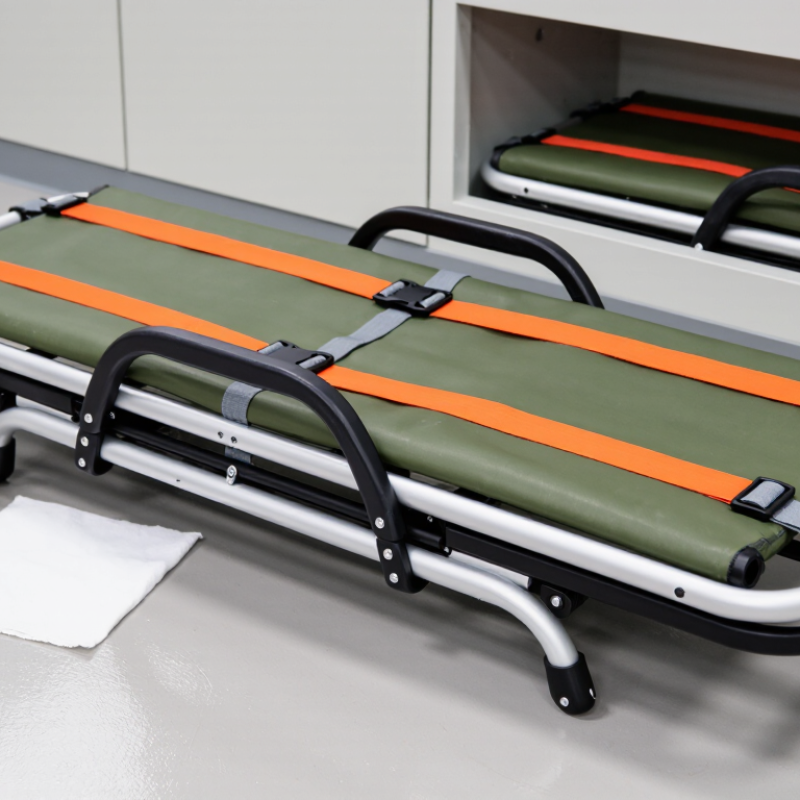
Before folding a portable emergency stretcher, check its rated load on the product label and in its user instructions. Count the patient’s weight and any equipment carried on the stretcher. Do not estimate from appearance. A sturdy frame can still have limits. If the label is missing or unreadable, pause and ask the supplier or responsible equipment lead to confirm the rating.
Check the model’s documentation for EN 1865-1 compliance; do not assume every folding stretcher meets this standard. Confirm that the paperwork matches the exact model, and follow the manufacturer’s instructions for inspection and folding. Look for bent tubes, loose fasteners, torn fabric, or damaged straps. Small defects matter. I once overlooked a loose strap during a routine check; it was a reminder that quick inspections can miss details. If damage or compliance status is uncertain, keep the stretcher out of service until it is assessed.
When the stretcher is confirmed safe to store, release its locks as directed and fold it without forcing the joints. Keep fingers clear of hinges. Secure the folded frame with its retaining strap, then store it in a clean, dry place where it cannot fall or block access. Avoid stacking heavy items on top. A damp storage corner seems harmless, but trapped moisture may damage fabric and fittings over time.
Before folding a portable emergency stretcher, make sure it is empty and resting on a flat, stable surface. Follow the stretcher’s instructions, since lock designs vary. Keep fingers clear of hinges and joints. Check that no strap is caught beneath a rail.
Release each frame lock fully before bringing the sides together. Some locks need a button pressed; others use a sliding catch. Do not force a resistant joint. Pause and look for a strap looped around a hinge, or fabric pulled tight across the frame. Then guide the rails inward slowly, keeping the carrying straps flat and outside the folding joints. Small movements help. A quick fold can trap webbing and damage stitching.
When the frame is folded, confirm that its latch engages, if fitted, and gently test that it stays closed. Loose straps can be laid along the frame rather than tucked into a hinge. I have found that one twisted strap is easy to miss, especially in low light. It is worth checking again. Store the stretcher clean and dry, away from sharp edges, and avoid stacking heavy objects on top. If a lock sticks or a strap is frayed, keep the stretcher out of service until it has been inspected and repaired according to its care instructions.
How to Fold and Store a Portable Emergency Stretcher?
Clean and fully dry the stretcher before folding it. CDC guidance treats visible soil as a barrier to effective disinfection. Put on suitable gloves, remove blankets, and inspect the mattress, straps, handles, and frame. Wash surfaces with detergent and water first. Then apply a locally approved disinfectant, following its required contact time. Do not wipe it away too early.
Dry every surface.
Pay attention to seams and buckle gaps. Moisture trapped inside folded fabric can encourage odor, mold, and material damage. The CDC reports that about one in 31 hospital patients has at least one healthcare-associated infection on any given day. This figure does not measure stretcher contamination, but it shows why routine hygiene controls matter. WHO’s 2022 global report also estimated healthcare-associated infections affect 7% of acute-care patients in high-income countries and 15% in low- and middle-income countries.
A practical mistake is folding the stretcher while its surface still feels cool or damp. It may look clean, yet hidden moisture remains. Leave it open in a ventilated area until completely dry. Check for cracked buckles, loose stitching, or bent joints before storage. Fold it according to the manufacturer’s structure, without forcing hinges or sharply creasing webbing. Store it off the floor, away from direct sunlight, chemicals, and standing water. A clean storage bag helps, but it cannot replace drying. Recheck the stretcher during scheduled inspections, because stored equipment can quietly deteriorate.
Use this general workflow after each use. Follow the stretcher’s care instructions and the disinfectant label, since materials and folding designs vary.
| Stage | Action | Practical method | Ready-to-proceed check |
|---|---|---|---|
| 1. Prepare | Put on appropriate personal protective equipment and perform hand hygiene. | Choose a well-ventilated cleaning area. Keep the stretcher away from clean supplies while it is being processed. | Cleaning supplies are ready, and the stretcher is separated from clean equipment. |
| 2. Inspect and separate | Check the stretcher for visible soil, damage, and removable parts. | Remove detachable components only as directed by the care instructions. Do not use a stretcher with damaged fabric, seams, fasteners, or frame parts until it has been assessed. | Parts requiring separate cleaning are identified, and any damage is reported. |
| 3. Clean | Remove visible dirt and body fluids before disinfection. | Use the cleaning product and method approved for the stretcher’s materials. Work from cleaner areas toward more soiled areas, and use a fresh cloth or cleaning solution when needed. | No visible soil remains on the surfaces being processed. |
| 4. Disinfect | Disinfect compatible, high-touch surfaces when required by the use setting and care instructions. | Use an appropriate disinfectant registered for the intended use. Follow its label for surface compatibility, application method, wet contact time, ventilation, and any rinsing requirements. Never mix cleaning chemicals. | All required surfaces received the labeled contact time without exceeding the stretcher’s material-care limits. |
| 5. Rinse if required | Remove residue when the product label or stretcher instructions require it. | Use the specified method and a clean cloth. Avoid soaking components unless their care instructions permit it. | No unwanted cleaner residue remains, and components are not excessively wet. |
| 6. Dry completely | Air-dry the fabric, frame, straps, joints, and removable parts before folding. | Spread the stretcher open in a clean, ventilated area. Follow the disinfectant label’s drying directions; do not fold or pack damp material. | Surfaces, seams, folds, and joints feel dry, with no visible moisture. |
| 7. Fold | Fold the stretcher according to its design and care instructions. | Place it on a clean surface, keep straps and fabric clear of hinges, and secure any built-in closure or retaining strap. Do not force a frame or latch. | The stretcher is folded securely, with no fabric pinched and no parts under strain. |
| 8. Store | Keep the clean, dry stretcher protected and ready for inspection. | Store it in its designated clean storage area, away from moisture, direct heat, and contaminants. Keep it accessible and avoid placing heavy items on top. | The storage area is dry and clean, and the stretcher remains easy to retrieve. |
| 9. Document and restock | Record processing and report any problems. | Follow local procedures for recording cleaning, disinfection, inspection, and repairs. Replace used cleaning supplies and return required accessories to the designated location. | Required records are complete, and the stretcher is ready for its next inspection or use. |
Important: General infection-prevention practice is to clean visibly soiled surfaces before disinfecting and to follow the disinfectant label, including its contact time. The stretcher manufacturer’s care instructions and local procedures take precedence for material compatibility and folding details.
How to Fold and Store a Portable Emergency Stretcher?
Before folding, clean the stretcher according to its care instructions. Let fabric, hinges, and straps dry completely. A dry-looking surface can still hide moisture underneath. Mold and corrosion often begin in these concealed areas. Fold the frame only along its designed joints. Do not force a stiff hinge. Keep straps flat, and avoid sharp bends that can weaken webbing over time.
The manufacturer’s temperature and humidity limits should control the storage location. Do not assume an indoor room is suitable. Record the room temperature and relative humidity with a calibrated meter, especially in garages, ambulances, and coastal facilities.
ISO 2233:2019 uses 23°C and 50% relative humidity as a standard conditioning atmosphere for packaging tests, but this is not a universal stretcher-storage requirement. The product instructions remain more important. WHO’s Medical Equipment Maintenance Programme Overview also identifies suitable operating conditions and preventive maintenance as essential controls. Storage is part of maintenance.
Keep the folded stretcher off the floor and away from heaters, windows, chemicals, and condensation-prone walls. Leave enough space for air movement. Do not seal a damp stretcher inside plastic. That mistake is easy to make.
In a practical inspection, check for rust spots, brittle fabric, loose stitching, and a musty odor every month. Record unusual temperature or humidity readings, then review the storage area instead of ignoring them. A checklist helps, but it is not infallible.
How to Fold and Store a Portable Emergency Stretcher?
Inspect the fabric, buckles, and frame at the required service interval, following the manufacturer’s schedule. Before each use, check for torn seams, frayed straps, cracked fittings, or bent frame sections. Run your fingers along the fabric edges; small snags can be easy to miss. Fasten every buckle and apply gentle tension. A loose connection may reveal itself before the stretcher carries a person. Record damage and inspection dates, and remove unsafe equipment from service until a qualified person assesses it.
Tips: Clean the stretcher with an approved method and let it dry fully before folding. Moisture trapped in a crease can encourage mildew or weaken some materials. Fold it as directed, without forcing stiff hinges or twisting the frame. Secure the folded unit so straps do not dangle, then store it in a dry, accessible place away from sharp tools and excessive heat. Check that the storage area has not become damp or crowded.
It is tempting to rush a routine check. I have seen how a worn buckle can look sound until it is opened and closed. If anything feels rough, sticks, or seems different from the last inspection, pause and investigate rather than guessing.
Read the rated load on the label and in the instructions. Include the patient’s weight and carried equipment. Never guess.
Pause and ask the supplier or equipment lead to confirm the rating. Keep uncertainty out of service decisions.
Check the documentation for the exact model. Do not assume every folding stretcher meets this standard.
Check for bent tubes, loose fasteners, torn fabric, damaged straps, cracked buckles, and loose stitching. Small defects matter. I once missed a loose strap during a routine check. It made me slow down.
Wear suitable gloves and remove blankets. Wash visible soil with detergent and water, then use an approved disinfectant. Follow its contact time.
Completely dry, including seams and buckle gaps. Dry every surface. If fabric feels cool or damp, leave it open in a ventilated area.
Release locks as instructed and fold along the designed joints. Keep fingers clear of hinges. Secure the frame with its retaining strap.
Follow the manufacturer’s temperature and humidity limits. Keep it off the floor, away from sunlight, heaters, chemicals, and standing water. Avoid sealing it while damp.
Inspect it on a regular schedule, and consider monthly checks for rust, brittle fabric, loose stitching, or musty odor. Record unusual room readings. A checklist helps, but it can miss things.
How to fold and store a portable emergency stretcher? Begin by checking its rated load and confirming that it meets the applicable EN 1865-1 requirements. Release every lock before folding the frame, and guide the straps clear of hinges and joints to prevent pinching or damage. Follow the manufacturer’s folding instructions rather than forcing any part into position.
After use, clean the stretcher according to appropriate hygiene practices and let it dry completely before storage. Keep it in a clean, dry place within the manufacturer’s stated temperature and humidity limits. At the required service intervals, inspect the fabric, buckles, straps, and frame for wear, damage, or loose connections. These steps help preserve the stretcher’s condition and readiness for future use.

Jones Medical