Choosing materials for a heavy-duty rescue stretcher is not just a strength question. Weight, grip, corrosion resistance, cleaning, and repairability all matter when teams work on wet ground, in narrow spaces, or under time pressure. In China, manufacturers may use aluminum alloys, stainless steel, reinforced polymers, composite parts, and coated technical fabrics. Each choice brings trade-offs.
Aluminum is often valued for a strong, relatively light frame. Stainless steel can suit parts exposed to repeated wear or moisture, though added weight may affect carrying. High-strength polymers and composites can reduce weight in selected components, but their performance depends on design, temperature, impact exposure, and inspection. No material solves every problem. Not even close.
What materials are best for heavy-duty rescue stretchers? The answer depends on the intended load, rescue environment, transport method, and maintenance routine. A frame that performs well during a controlled test may feel different on a muddy slope. A reassuring spec sheet is useful, but it is not the whole story. Check the manufacturer’s stated load rating, test information, material grade, joint construction, and cleaning guidance. Ask how damaged parts can be inspected and replaced.
Small details matter. Grip texture, weld quality, fabric seams, and corrosion-resistant finishes can influence handling over time. Buyers should compare complete stretcher systems, not materials in isolation. And be cautious with claims that sound absolute; field conditions are messy, and no material remains perfect forever.
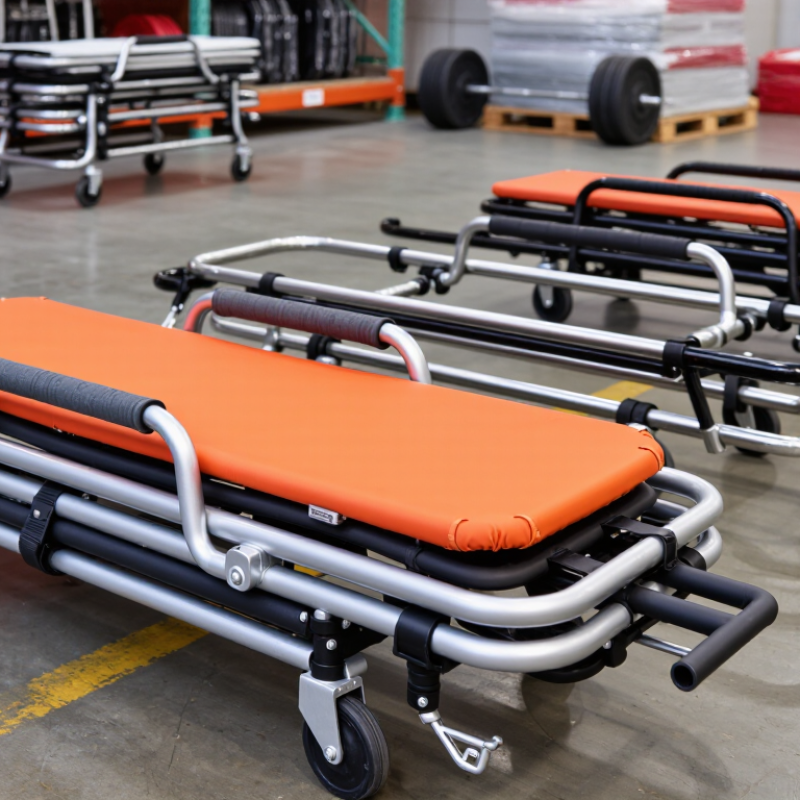
What Defines a Heavy-Duty Rescue Stretcher?
A heavy-duty rescue stretcher is not simply one made from thicker metal. It must safely carry a stated working load while resisting bending, impact, abrasion, and repeated handling over uneven ground. The frame, joints, welds, patient restraints, and lifting points function as one system. A strong tube cannot compensate for a weak connector. Small details matter.
Material data helps, but does not settle the question. The Aluminum Association’s Aluminum Design Manual lists 6061-T6 with a typical minimum yield strength near 240 MPa for common product forms; actual values vary by thickness and form. This alloy offers a useful strength-to-weight balance, while stainless steel can improve corrosion resistance at a weight penalty. Reinforced polymers may reduce mass, but need scrutiny for punctures, UV exposure, and cold brittleness. Lighter is not always safer. Not material alone.
Performance should be judged by tested capacity, not marketing adjectives. EN 1865-1:2010+A1:2015 specifies performance and safety requirements for ambulance stretcher systems. Test the whole assembly. For technical rescue, check the stated working load, test method, inspection criteria, and compatibility with harnesses and hoists. Ask how ratings account for dynamic movement; lowering a patient over rocks creates different loads from a static workshop test. Inspect welds after real deployments. This is easy to overlook. No single material defines “heavy duty”; design, workmanship, maintenance, and documented testing do.
| Stretcher Component | Common Material | Useful Characteristics | Trade-Offs | Typical Rescue Application | What to Verify |
|---|---|---|---|---|---|
| Structural frame and rails | 6061-T6 or 7075-T6 aluminum alloy | High strength-to-weight ratio; corrosion resistance; can be formed into rigid rails and frame members. | Can dent or deform under impact; strength depends on alloy, temper, wall thickness, joints, and design. | Portable basket, folding, and evacuation stretchers where manageable carrying weight is important. | Alloy and temper, weld or joint design, finish, inspection guidance, and the stretcher’s tested load rating. |
| Frame fittings and exposed hardware | 304 or 316 stainless steel | Good resistance to corrosion and wear; suitable for pins, fasteners, and hardware exposed to frequent handling. | Heavier than aluminum; corrosion performance depends on grade, environment, surface condition, and maintenance. | Connection points and hardware used in wet, coastal, or demanding outdoor environments. | Stainless grade, compatible fasteners, locking method, drainage, and post-use cleaning requirements. |
| Patient-support panel or molded tray | High-density polyethylene (HDPE) | Impact-resistant, water-resistant, and easy to clean; can be molded into a continuous support surface. | Can flex; performance varies with thickness, geometry, temperature, and reinforcement. | Rigid patient-support surfaces and washable components on rescue or evacuation equipment. | Panel thickness, reinforcement, edge design, temperature limits, and compatibility with cleaning agents. |
| Flexible patient-support bed | Coated polyester fabric | Woven polyester provides a flexible support bed; coatings can improve resistance to moisture and make cleaning easier. | Coating can wear, crack, or be damaged by abrasion and chemicals; fabric strength alone does not determine safe capacity. | Basket stretchers and other designs that use a suspended or flexible patient-support surface. | Fabric construction, coating, seam and attachment strength, abrasion resistance, and cleaning instructions. |
| Webbing, straps, and restraint components | Polyester or nylon webbing | Woven webbing is flexible and can provide secure restraint when correctly sized, stitched, anchored, and adjusted. | Ultraviolet exposure, abrasion, contamination, and damaged stitching can reduce serviceability; nylon can absorb more moisture than polyester. | Patient restraints, carrying handles, and attachment points, subject to the stretcher’s design and instructions. | Webbing specification, stitching pattern, buckle material, anchor strength, inspection criteria, and replacement interval. |
| Impact-absorbing pads and edge protection | Closed-cell polyethylene or polyurethane foam | Can cushion contact points and help protect a patient or frame from localized impact; closed-cell grades resist water uptake better than open-cell foam. | Foam can compress, tear, or degrade; it is not a substitute for a structurally rated frame or restraint system. | Padding on contact areas, frame edges, and selected patient-support surfaces. | Foam type, density, attachment method, cleanability, and resistance to the expected environment. |
| Composite panels or selected structural parts | Fiber-reinforced polymer composite | Can provide a stiff, lightweight part and resist corrosion; properties can be tailored through fiber and laminate design. | May be vulnerable to hidden impact damage or delamination; repair and inspection methods can be more specialized. | Purpose-designed panels or components where low weight and corrosion resistance are priorities. | Laminate construction, impact testing, inspection method, repair guidance, and validated load testing. |
What defines a heavy-duty rescue stretcher? It is a complete system designed and tested for its intended patient load and rescue environment—not simply a stretcher made from a particular material. Compare the rated load, structural test results, restraint and attachment design, durability, cleanability, inspection requirements, and applicable local standards. Always follow the manufacturer’s instructions and use the stated load rating for the complete stretcher.
It must carry its stated working load and resist bending, impacts, abrasion, and repeated handling. The frame, joints, restraints, and lifting points must work together. Small details matter.
No. A strong tube cannot make up for a weak connector or poor weld. Check the complete assembly and its documented test results.
Aluminum is lighter by density, which can help during long carries. Stainless steel offers corrosion resistance but adds weight. Finished weight also depends on tubes, braces, hinges, and fasteners.
They can reduce weight, but inspect their resistance to punctures, ultraviolet exposure, and cold. Impact damage may be difficult to spot. Check fittings and edges closely.
A stated rating should be supported by a test method and inspection criteria. Ask whether it applies to the whole stretcher system, not just one component.
Not necessarily. Lowering someone over rocks can create different loads from a stationary workshop test. Ask how testing accounts for movement.
Look for damaged welds, dents near joints, loose fittings, and grit in hinges. A wet loading bay can expose problems that clean specifications miss.
Match its load rating, weight, and construction to carry distance, cleaning routines, and repair access. I may be overlooking local conditions, so review the actual route too.
Choosing the right materials for a heavy-duty rescue stretcher means balancing load capacity, weight, durability, and ease of cleaning. What materials are best for heavy-duty rescue stretchers? Common options include aluminum or steel for frames, reinforced polymers for selected supports, and tough, abrasion-resistant fabrics for patient surfaces. Aluminum can offer a useful strength-to-weight balance, while steel may suit applications where rigidity and resistance to deformation are priorities. Material performance depends on construction, joints, coatings, and the quality of the finished product, not just the material name.
Buyers should check documented load ratings, product testing, manufacturing quality controls, and applicable safety standards. They should also consider the rescue environment: wet or coastal settings call for corrosion-resistant finishes, while rough terrain may require durable surfaces and easily maintained components. Comparing weight, carrying comfort, cleaning requirements, repairability, and expected service life can help identify a stretcher suited to the intended work without compromising safety.

 Jones Medical