Choosing an ambulance stretcher is not simply a matter of price, weight, or appearance. In emergency transport, a few seconds and a secure lock can shape the entire patient handover. This guide examines five modern ambulance stretchers designed for practical one-person operation. Can one person operate a modern ambulance loading stretcher? In many cases, yes, but the answer depends on powered assistance, patient weight, loading height, and crew training. A stretcher that feels light in a showroom may behave differently beside a narrow curb or uneven ramp. Real conditions matter.
Our comparison focuses on features clinicians and transport teams can verify: controlled loading, adjustable height, wheel stability, braking, mattress support, restraint access, and cleaning time. We also consider battery dependence, manual backup, maintenance requirements, and the learning curve. These details are easy to overlook. They should not be. Product specifications provide a useful starting point, yet hands-on trials reveal problems that brochures may hide. A side rail can catch a glove. A release handle can feel awkward under pressure. Those small issues deserve honest attention.
The five selections are not presented as universal winners. Patient types, vehicle design, staffing, and local protocols influence the safest choice. We rely on manufacturer information, established clinical considerations, and practical user experience, while recognizing that field performance can vary. No stretcher removes the need for proper training or a second responder when conditions demand one. That limitation matters. Read this guide as a careful shortlist, not a substitute for equipment evaluation. The best option is the one your team can control confidently, inspect routinely, and use safely during an ordinary call—and a difficult one.
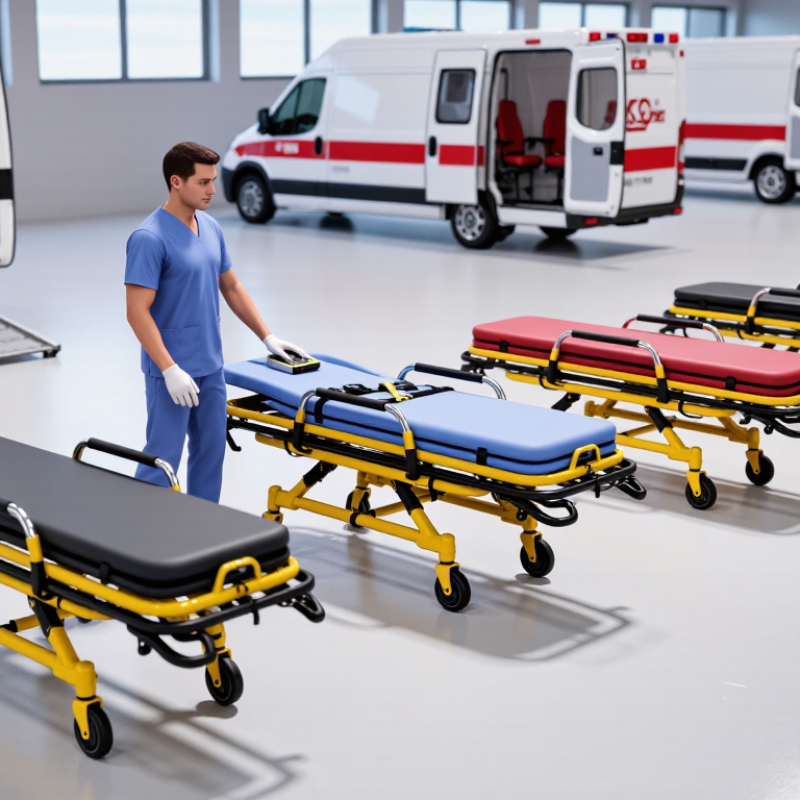
5 Best Ambulance Stretchers One Person Can Operate?
A one-person ambulance stretcher must reduce physical effort without reducing control. The key is not simply a low price or lightweight frame. It needs assisted loading, secure locking points, and balanced movement over uneven floors. Powered hydraulic models can raise and lower a patient smoothly. Self-loading designs can reduce lifting beside the vehicle. Stair-capable stretchers help in narrow buildings, but their tracks need careful handling. Five common categories may appear suitable, yet the right choice depends on crew training, patient size, and vehicle layout.
The most useful design has controls within reach while the operator guides the frame. Large wheels should roll across door thresholds without sudden stops. A visible safety latch confirms that the stretcher is locked inside the ambulance. Adjustable height also matters. At the patient’s bedside, the operator should avoid bending deeply or twisting the back. A wide mattress, strong side rails, and clear restraint points improve stability during movement. Patient weight limits must remain visible and easy to check.
Small details reveal practical quality. A handle that feels slippery with wet gloves can become a serious weakness. I would not judge a stretcher after one smooth warehouse demonstration. It should be tested on ramps, tight turns, damaged pavement, and repeated loading cycles. Staff should practice with realistic weights, not only empty equipment. Even then, one-person operation may not be appropriate for every patient or emergency scene, so local procedures and clinical judgment still control the decision.
| Stretcher Type | Why It Is Suitable for One-Person Operation | Typical Safe Working Load | Typical Empty Weight | Height Adjustment | Key One-Person Features | Best Use Case | Important Limitation |
|---|---|---|---|---|---|---|---|
| Powered Ambulance Stretcher | An electric actuator raises, lowers, and often assists with loading, reducing lifting and back strain. | Approximately 250–320 kg 550–705 lb |
Approximately 75–115 kg 165–254 lb |
Electric height adjustment, commonly about 35–90 cm | Powered lift, powered loading assistance, locking casters, adjustable backrest, safety rails, restraint system, battery status indicator | Frequent emergency calls, high patient volume, and situations where manual lifting should be minimized | Battery condition, floor slope, uneven ground, and local protocols may still require a second trained operator. |
| Powered Loading Cot | The stretcher can be positioned at a low height and mechanically assisted into the ambulance, limiting the force needed from the operator. | Approximately 230–300 kg 505–660 lb |
Approximately 70–105 kg 154–231 lb |
Manual or powered adjustment, commonly about 35–90 cm | Powered loading wheels or lift mechanism, guided loading path, automatic or assisted undercarriage folding, central locking system | Ambulances with limited loading space and crews seeking easier cot loading and unloading | Requires compatible ambulance floor hardware and sufficient battery charge for powered functions. |
| Manual Hydraulic Stretcher | A hydraulic pump reduces the effort required to raise the patient platform and allows the operator to select a comfortable working height. | Approximately 220–300 kg 485–660 lb |
Approximately 65–100 kg 143–220 lb |
Manual hydraulic adjustment, commonly about 40–85 cm | Hydraulic pump, large swivel wheels, directional lock, low loading height, fold-down side rails, patient restraints | Services that need reliable height adjustment without charging batteries or maintaining electric actuators | The operator must still push, steer, and load the stretcher; heavier patients or ramps can require additional assistance. |
| Powered Bariatric Stretcher | Powered movement and height adjustment help manage a wider, heavier patient platform while reducing manual lifting demands. | Approximately 320–450 kg 705–990 lb |
Approximately 100–145 kg 220–320 lb |
Powered adjustment, commonly about 40–85 cm | Extra-wide platform, reinforced frame, powered lift, heavy-duty casters, extended restraints, low-height access | Transporting larger patients when the ambulance and loading system are designed for the stretcher dimensions and weight | Its greater size and weight can make steering, turning, and loading difficult in narrow areas; a second operator is often advisable. |
| Lightweight Folding Stretcher | Its low mass and folding frame make it easier for one trained person to carry, position, and store when powered equipment is unavailable. | Approximately 150–250 kg 330–550 lb |
Approximately 8–15 kg 18–33 lb |
Usually fixed or limited height adjustment | Lightweight aluminum frame, folding legs or frame, carrying handles, compact storage, basic restraint straps | Stairways, confined spaces, evacuation support, and backup transport where compactness is more important than powered loading | It does not provide powered lifting or ambulance loading assistance, so patient transfers and ramps may require more than one person. |
Choose a lightweight frame, powered height adjustment, large locking wheels, and secure restraint straps. A narrow doorway can still defeat good equipment.
Secure the chest, hips, and legs without creating pressure points.
A fluid-resistant mattress supports quick cleaning between patient transfers.
Check the frame, mattress, wheels, side rails, battery, brakes, and restraints.
Lower the stretcher before transferring the patient.
Stand where you can control the direction without twisting.
No. Patient weight, doorway width, floor conditions, and operator strength affect safety.
Test loading, unloading, ramps, uneven pavement, and awkward approaches.
Choosing the best ambulance stretcher for one-person operation requires more than a lightweight frame. The stretcher should combine balanced weight, smooth-rolling wheels, secure locking systems, adjustable height, stable side rails, and an intuitive loading mechanism. Can one person operate a modern ambulance loading stretcher? In many situations, yes, when the equipment is specifically designed for solo handling and the operator has received proper training. Important options include powered stretchers, assisted-loading models, foldable stretchers, compact transport stretchers, and manually operated units with counterbalanced mechanisms.
A careful comparison should focus on total weight, maneuverability in narrow spaces, height adjustment, patient stability, battery or mechanical reliability, and compatibility with the ambulance loading area. Safe operation involves inspecting the stretcher, securing the patient, positioning the wheels correctly, engaging locks, maintaining control during transfers, and confirming that the stretcher is fully secured inside the vehicle. Although solo-capable systems can improve efficiency, operators should always follow training procedures and use assistance when the patient, environment, or equipment conditions create additional risk.

 Jones Medical